

Inheritance
Twelve Poems of family memory, place and the lives that shaped my imagination.
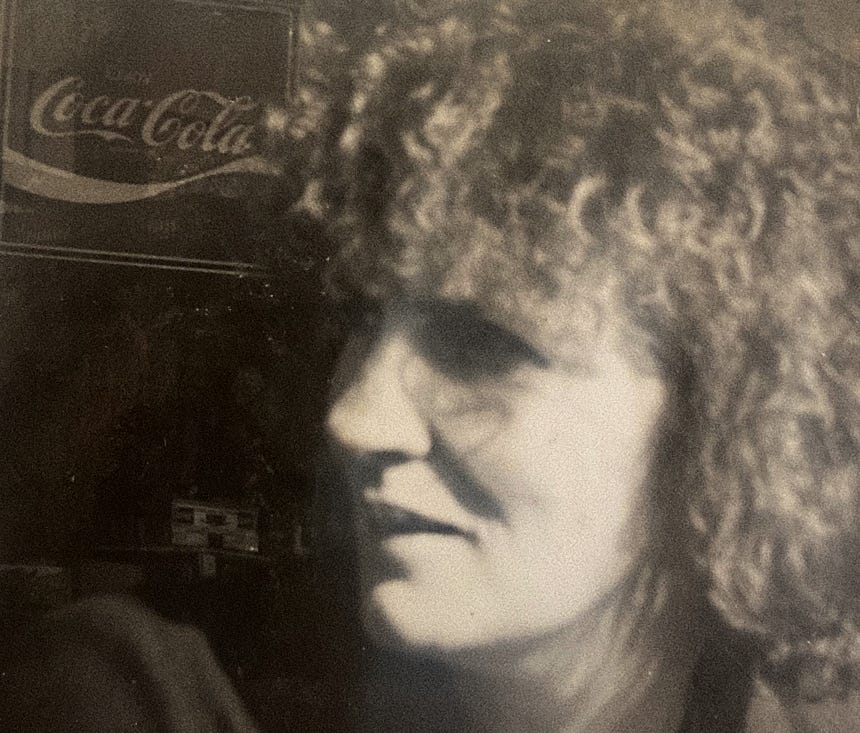
For Mother’s Day, I’ve gathered these twelve poems under the title Inheritance. They are shaped in different ways by my mother’s upbringing and by the rich Irish Catholic Australian world she came from. A world of family stories, endurance, poverty, humour, heartbreak, faith, hardship, and strong ties to place.
These poems are not family history in any formal sense, but they do carry something of that inheritance: the lives of men and women who survived the Irish Famine and came to Australia in the 1850s; the men who mined, and sometimes died young or disappeared; the women who raised us and taught us about God. There is a similar history in my father’s family too. Their lives were less Catholic, but no less hard. They came from Ireland and northern Wales, again to cut timber and work the mines for other people. My imagination is made of this.
I think my mother would have loved these poems. You can read more about them in the original Substack posts where they first appeared over the last year or two.
I hope you enjoy the collection.
(This article may be shortened in email - if so please feel free to read on the App or Web)
Go Dance With Her
(for my great-grandfather, miner and lover of Saturday nights)

The fiddler is late for the dance—
lost in the dark
somewhere on the road,
moonlight not enough.

You wait with the other men
in the shy shadow by the gate.

There’s a storm far away.
Listen to its deep music
and a familiar woman’s laugh
coming from under the lamplight—
where the sound of hard heels
on sawdust and floorboards calls you.

She is there, your Annie—
a breath of fresh air.
Go dance with her.

Let your courage
wash the doubt dust off.
Get out of your cage.
Don’t be dynamite deaf,
reluctant alchemist—
it’s a new century now.

Find your metal.
Release the pressure valve.
Stoke your boiler heart.
Tumble toward your love
in the dancehall of delights—
Saturday night.

Let night air break your fall.
Step into the bold lamplight.
Leave the clearing steam
of the high shed behind
tomorrow's sunlight will grow gold.

Let your mercury
run back to the bottle.

Listen—
the mines are silent now in your ringing ears.
The cages are lifted
for the last time.
The windlass has stopped.
The boiler
has returned to the road.

The fiddler has found his way
to this Saturday night.
Go dance with her.

Jonquils
We are like an empty paddock now,
a few bricks strewn here and there.

Mostly, we are doing well
from the outside—
but sometimes a great dark hole
will open under our feet.

We search for structure,
for what used to be,
but then we are swallowed
by the same dark fear
of being abandoned.

Just a few jonquils grow there still—
memories of joy,
and childhood laughter.

Love,
in spite of the silence.

Deep Lead
(for Maurice McCarthy)

It’s so dark.
Finding my way out—
I knew you’d find my dreams.
They rise up with the lightning
that searches for my love.

It’s quiet.
Deathly quiet.
And still I knew
I’d find my way to this song.
It took a hundred years.

You see, I was lost in the deep drift,
up from the north drive—
fortified wood for bones,
rough diamonds for eyes.

Down here with the pit ponies,
rusted carts and timber boxes,
cold water rising,
lapping at my boots—
sailing me slowly to hell.

My friend spent a year down a Cornish coal mine,
picking the face under Thunder Bay—
he could hear waves
on the other side of the wall,
daring him to die.

I told him I’d never seen the ocean—
couldn’t swim either.

But I made it out,
up from the deep lead,
with gold-washed wages
for my young family.

Your mother, my Annie, died broken-hearted,
a candle lit each night in her window
for your long-lost father—
who vanished down a dark road.

I feel I’m on the same road—
foggy, familiar.

She swore he’d come back.
Swore it till the end.
But he wasn’t there.
And neither might I be.

The Battle of Sebastopol
(for my grandmother and her mother Annie)

No glory in this place—
just hard streets,
frost-filled drains,
an orphanage on the edge of town
daring us to forget,
like generations before—
Ireland emptied.

Potato fields left fallow,
blighted on a rocky rise.
Stone houses, cloth-hung doors,
abandoned to the landlord’s curse.
We came here to live,
but the mines swallowed us whole—
just as they did our fathers,
day after day
of their short lives.

The Battle of Sebastopol
was nothing
compared to our love
under siege:
not enough blasted money,
too much drink for bachelor uncles,
too many muddy mornings
on the way to church in the rain.

For one hour,
we felt respectable.
Our mother—
leaning into the back of a hardwood pew,
among quiet rows of longing families—
let herself rest.

She surrendered
to the silence,
to the prospect
of a future
without flowers.

A Shawl of Bracken
(for my mother, Peggy)

I was a silent child,
wordless for days—
sometimes weeks.
“What a good girl she is,”
they’d say,
not seeing the quiet
as loneliness.

I wandered alone
up behind our house
to where the old shearing shed
rattled in the wind
on the southern hill
wrapped in a bracken shawl.

Once, it had been a home—
grand, bigger than ours.
You could still hear
voices sometimes
low in the wind
moving through the back rooms
like an old woman
finally home with firewood.

Our sheep were shorn
there once a year—
when everything stopped
for Uncle Lou.
We’d take up lunch in a basket,
tea in old bottles
wrapped in yesterday’s news
to keep it warm.

I’d slip away
from the newly shorn ewes,
wander the empty rooms
where wallpaper once hung—
glued to newsprint from 1916—
to hessian walls that shifted
in the drafts.

We’d pulled the pattern off
years before
but I’d still read
the advertisements for Ford cars
and .22 Remington rifles.

I found treasures too:
dark green glass,
brass buttons hiding
under rusted tin.
I’d tuck them in the hollow walls
for safekeeping.

Then I’d look down to the highway,
and wonder what
the real people were doing.
Not knowing
I was real too.
I just hadn’t
spoken my mind yet.

Life Lines
My Father always sat
at the fire end of the table—
dry hands, life-lined,
and waiting.

A bench ran along the back wall,
a few chairs lined the other side.

I don’t think Mum
ever sat down.

After serving Dad
and the kids,
she ate her meal
under the window—
at the wash-up table
where a dish and tray
were always waiting
for dirty plates.

There was no sink
in the early days.

A dresser ran along one wall
where clean dishes
were later stacked—
ready, and waiting.

The only other furniture
was an easy chair
in the corner
by the open fire
always ready for a visitor.

I always stayed away
a long time
when a roast was cooking.

Roasts were best
if I came home late—
my plate set aside
and slid into the oven.

Everything would crisp—
the meat, the potatoes—
a wonderful brown coating
sealed in
by my mother’s waiting.

I always stayed away
a long time
when a roast was cooking.

It was not much fun
to be at home—
just something else to do:
wood to chop,
clothes to hang,
potatoes to bag,
a muddy floor to wash.

It was good
to just sit against a warm stone wall
somewhere,
and dream.

Or draw
in an old exercise book,
or scratch patterns
in the gravel
by the side of the road
with my stick.

The cows
often wandered off
when I was minding them.

I’d hear the horn of a car—
a cow on the road,
a car, waiting.

Time to get up,
and run barefoot
to bring them back
to where they belonged.

To the paddock.
To where I'd leave them waiting
until milking time
when they'd be ready
for our call
and the life lines
of our gentle hands.

Heathers’ Paddocks
The creek was in flood,
cows high near the fence line,
heads down—
knowing.

She is on her way
as the first stars shine,
feet cold
but clean now

from the green creek
where yellow flowers swim
beneath the surface—
flowing.

The cows walk down
at her creek-song call,
from the hollow,
thinking of the stove door
opening.

Soon she feels the steam
of their warm breath
as she touches their sides—
the gate
closing.

At the main road,
free from far-off headlights,
imagined horns
loud in the darkening.

Muddy lane beckoning,
and the milking shed
where her father hides
his last drink
smiling.

Confession
South of the house,
behind the low stone wall,
she didn’t hear what she thought she’d hear.

Instead, a long-lost sound
rose from the valley—
a fiddle calling from the brambles,
pulling her toward better times.

Her husband had gone
to the pub,
and now only their draught horse
knew the way home in the dark.

She had come out to listen for him—
trace chains rattling home
along the road
in the back of the cart.

But the player in her valley
was bowing a different story
than the one she was praying for—

in her slow, steady plough
through another night of cooking,
of sitting by the fire
with the restless flame
of six children burning.

Evening hung above them
like smoke that wouldn’t lift
on the southwest wind—

the stinging promise of yelling,
of cups thrown at any child
still awake, watching insects
crawl from firewood by the hearth
toward the hole in the linoleum
in a daring kitchen.

Out in the lane, Molly looks
for a lantern light
down in the valley, near the bridge,
hoping the fiddler’s song
might be loud enough
to scare him sober—

or send the horse into the creek,
cart tumbling, wheels spinning
in the ditch behind.

But that thought only survives
for a forgetful moment.

She goes back to praying
for peace—
and leaves the sad tune
for confession.

Sunday morning.

Tickling Eels in the Creek
You laughed
as I lifted up the dark, beautiful thing
and threw it on the bank.
Bewitched as it danced,
too slow to jump on it or hug it,
it escaped through the tangle—
that beautiful black eel in the night,
alive under moon and stars.
We settled back down,
chins on the crumbling edge,
arms in the water,
hands in the mud,
waiting for the moment,
waiting a million years,
in a child's mind.
You sighed,
“we’ll be here all night.”
“be patient,” I said.
The rabbits rustled,
the fox listened,
the stars shimmered,
our faces—dark faerie reflections.
Our father could be heard, coming down the hill,
a ghost from Loch Neagh
to call us in.
But we were lost in the night,
tickling eels in the creek,
knowing nothing of what the old ones knew.
“Call us in."

I Begin My Search
I begin my search through the blackberries
for the nest of a hen
that I hear softly clucking to her eggs—
the ones she has hidden for weeks
under the feathers of her wings.

She doesn't know she is giving her nest away
as my bare feet tread gently
between thistles and thorns,
seeking treasure as if her eggs
were a unicorn's horn—

mystery beneath the blackberries
that hide a long-stacked wall
which keeps the churchyard square and neat
and not a place where foxes go
to tell their sins of death and deceit.

The hen shoots out past my feet
and then my hand finds the hollow
and I bring up the eggs
and put them in the hat I just wore to Mass—
the light blue one that looks like a queen's guard's.

Older eggs look and feel different
than freshly laid ones.
Newly laid eggs have a coarse-smooth warmth—
if you rubbed one on your tongue it would scrape,
ever so slightly.

As they age they grow smoother,
often marked by the hen's feet or feathers,
dirty from the muddy grass
and the yard where the cows walk.

The hens, free to walk where they feel,
lead me to a hatful of eggs—
with the same faith
with which they remain hidden
in the shadow tunnels
of the blackberries—

which seem to run deeper each time,
to where I almost disappear.

Fenced Country
She stands alone at the fenceline,
far enough from the house
that only the windmill—
drawing from a hidden spring—
can be heard from her distance.

Along the lane’s edge
a greenfinch lands,
the wire vibrating in her hands
before the bird flies off
toward a boxthorn where rags are tied—
as if that were where all wounds begin.

The wire will leave a stain—
dried blood on her hands—
reminding her of the story they tell:
how, when she was born,
her mother almost died.
An uncle was driven twenty miles,
his blood keeping her alive
on the same road she watches now.

The wire sometimes dances, she knows,
when a raven lands,
bringing its black news
of life and death
from the fenced country.

The wire is stronger
than all their sins, she thinks,
and one day it will lose itself in grass,
ready to tangle a driveshaft.
Everyone’s luck runs out.

Rabbits tunnel to the cemetery
along the same road—
their burrows under granite and bluestone
tilting old names and prayers
down toward home—
where a strand of her lies,
rusted, bent, broken,
in the paddock sold long ago.

Multicoloured Mountains
In the city where I now stand,
my clothes blend in perfectly—
grey as the streets,
like his and like hers.

I remember when I was a child,
how, when it rained,
we would race to the clothesline
with our mother laughing,
without a basket—
she would heap the clothes into our proud little arms.

Little multicolored mountains,
we'd stagger up the garden path,
the big raindrops only hitting our heads,
splashing joy in unexpected showers.

Now, the rain feels different here,
less a play, more a grey veil
over the city's hurried pace.
Yet, sometimes, a sudden downpour
and the laughter of a child
racing to shelter,
stirs the memory—
bringing back the vivid colors
of those mountains we once were.

What stayed with me most is how these poems never separate memory from landscape.
The paddocks, fences, kitchens, sheds, roads and creeks do not feel like settings, but like living extensions of the people themselves.
There’s a quiet dignity moving through these pieces.
Not romanticized hardship, but lives carried through weather, labour, silence, waiting, and small gestures that somehow continue speaking long after the people are gone.
That’s an incredible collection, Damian. I’m sure your mother would have loved it. Touching tribute x