

The Listening Place

Confession
South of the house,
behind the low stone wall,
she didn’t hear what she thought she’d hear.

Instead, a long-lost sound
rose from the valley—
a fiddle calling from the brambles,
pulling her toward better times.

Her husband had gone
to the pub,
and now only their draught horse
knew the way home in the dark.

She had come out to listen for him—
trace chains rattling home
along the road
in the back of the cart.

But the player in her valley
was bowing a different story
than the one she was praying for—

in her slow, steady plough
through another night of cooking,
of sitting by the fire
with the restless flame
of six children burning.

Evening hung above them
like smoke that wouldn’t lift
on the southwest wind—

the stinging promise of yelling,
of cups thrown at any child
still awake, watching insects
crawl from firewood by the hearth
toward the hole in the linoleum
in a daring kitchen.

Out in the lane, Molly looks
for a lantern light
down in the valley, near the bridge,
hoping the fiddler’s song
might be loud enough
to scare him sober—

or send the horse into the creek,
cart tumbling, wheels spinning
in the ditch behind.

But that thought only survives
for a forgetful moment.

She goes back to praying
for peace—
and leaves the sad tune
for confession.

Sunday morning.
Epilogue
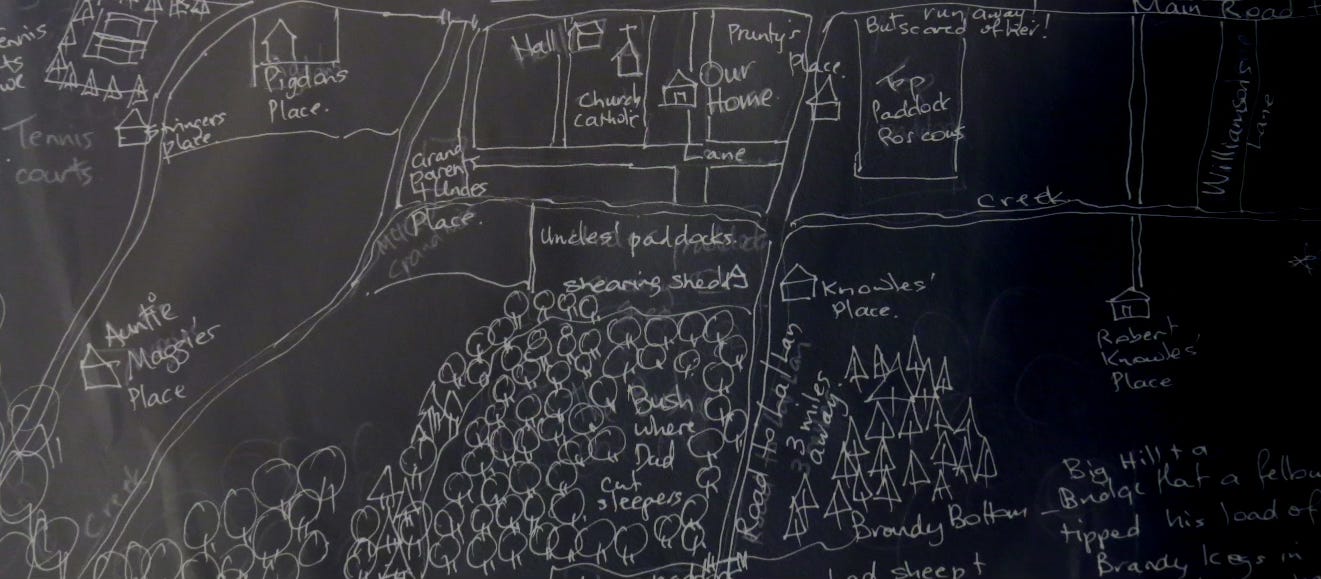
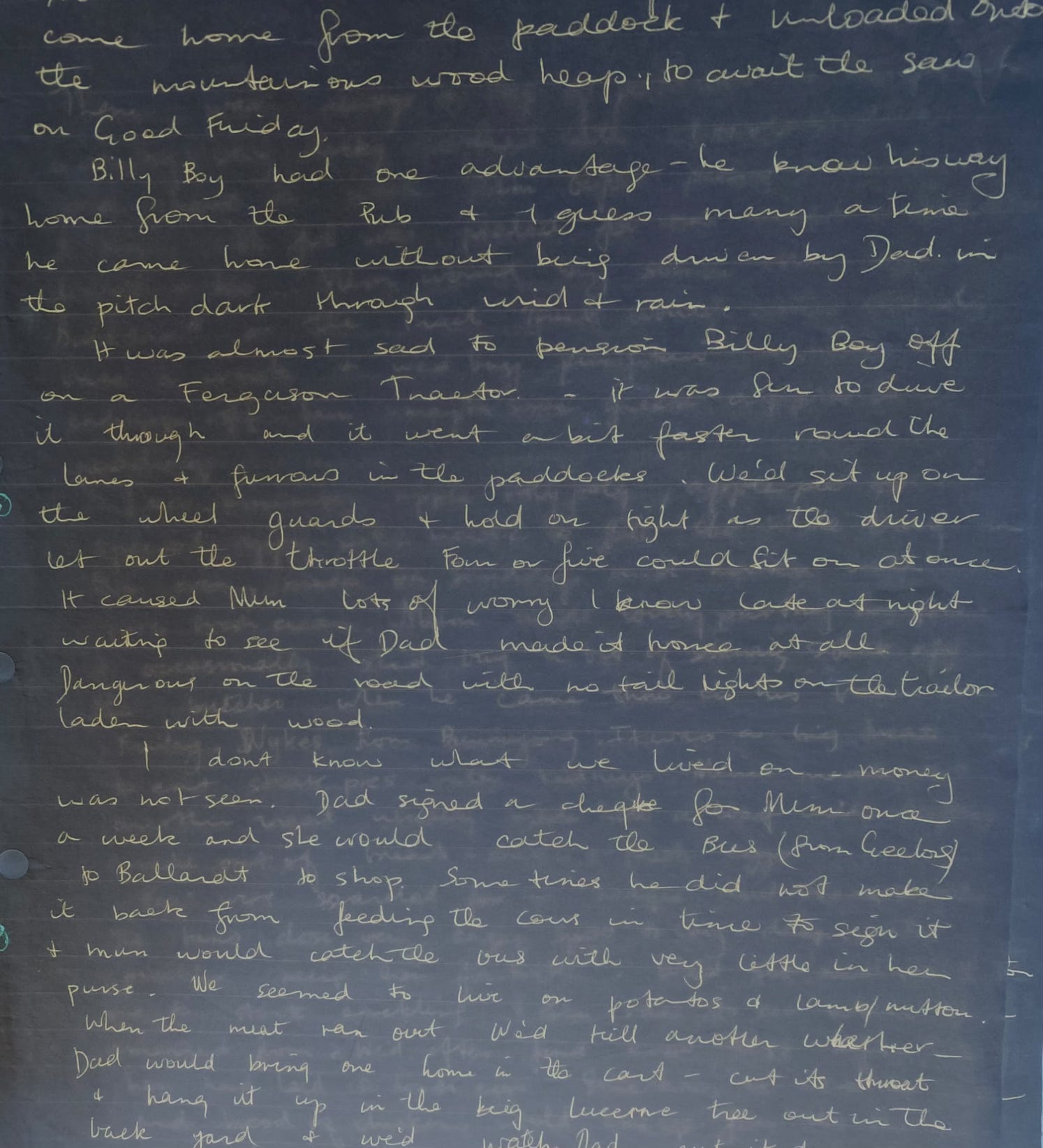
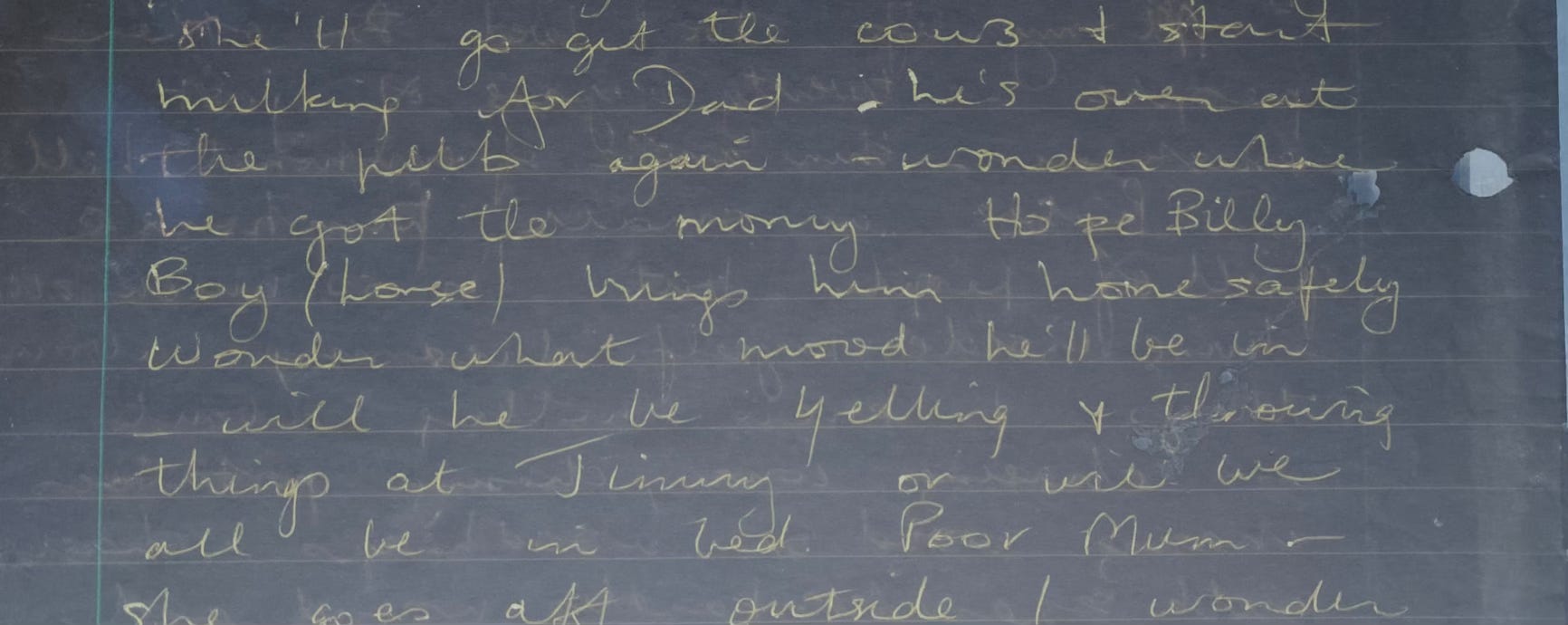
This poem is another born out of my mother’s and grandmother’s stories. I’m lucky to have some of my mother’s own writing. Reflections on growing up in a large, fairly poor Irish Catholic family in central Victoria. She was often blunt about how oppressed she felt, especially as a young woman. Historically, the women in her family leaned heavily on their faith just to survive the hardship they endured. And often, it was the men in their lives who were responsible for that hardship.
Her mother, Molly, had once been a nun and remained devout her entire life. I imagine she drew strength from her religion during those hard years, though I believe there must have been deep frustration too. From what I knew of her, she wasn’t someone who expressed anger easily. My grandfather, on the other hand, often did, especially if he’d been drinking.
And yet, my mother also writes with great tenderness about time spent with her father: milking cows, working the land. It was the drinking - and the unexplained emotional pain he must have been carrying, that altered everything. She also writes insightfully about how their religion, another very patriarchal system, shaped her feelings about her body, her voice, her self-worth. Like many children in such situations, she escaped into a deeply spiritual and imaginative world. And Molly, it seems, gave her the space to do that. Perhaps as a quiet act of protection for a sensitive soul.
One memory my mother shares is of being allowed to stay home from primary school for six months, not because she was sick, but simply because she was not talking. It’s in these silences, and in the spaces between love and fear, that this poem was born.
And while the poem is from my imagination, it rests on emotional truths passed down through memory and story. Truths that continue to echo, even now. I believe it’s good to write about such things and express them. Who knows how much pain from previous generations is carried in our bodies? I’d rather pass it on gently, in the emotional context of a poem.


I love this piece. So glad to have been invited in. The inter generational stuff is so important to explore and reveal. You write so truthfully. Thank you.
Unbelievably beautiful and heart-breaking and true.