

Riding Through the Mountains
This essay forms part of an unfolding book I’m drafting here on Substack, under the working title Walking with Poetry in Mind. I’m writing it for my son to read when he is older and anyone else who wondered where the old me disappeared to
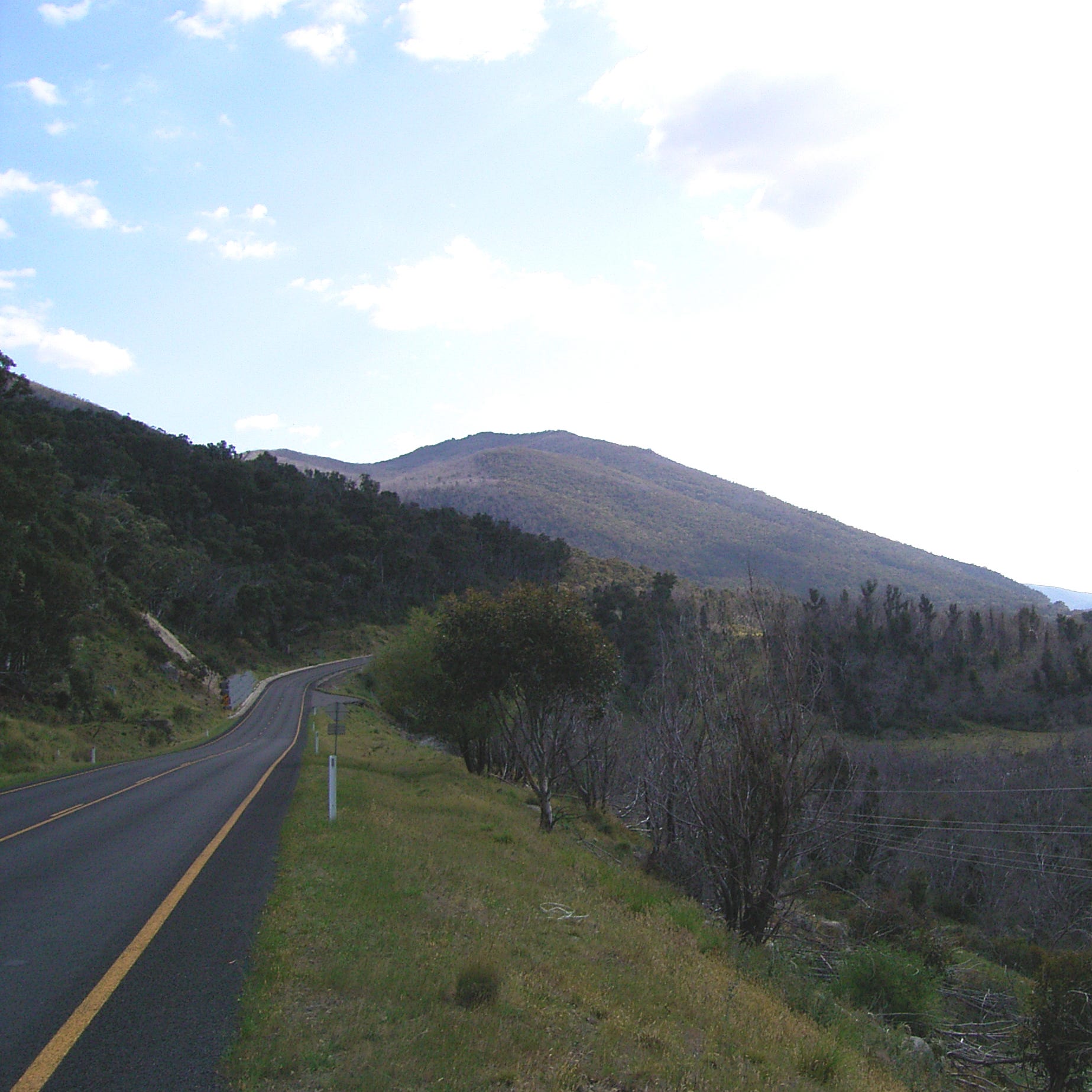
Riding Through the Mountains
I rode into the mountains because I needed distance, but what I found there was something harder and more necessary than escape.
Son, this chapter is partly about what I learned on the road, and what I hope you may one day understand sooner than I did.
The first thing is that it is the experience itself that teaches you. It is very difficult to learn how to live from books alone, or from thinking too much about life from a safe distance. Before that bicycle journey, I had spent years reading self-help, psychology, and Eastern philosophy. Some of it helped. But I had also become too cerebral. Deep down, I knew I was not living as fully as I could have been.
Before this ride, the ending of my relationship felt like a tragedy. Looking back, it was also an opening. It gave me the chance to strip away some of the old ways I had been living, and perhaps some of the ways I thought I was supposed to be. The bike ride became my way of leaving some of that thinking behind.
By the time I reached Wodonga, I had been on the road for about a week. My body was beginning to toughen up. I’m not sure if my mind was doing the same thing. At Hume Reservoir I decided to ride across the empty dam bed along an old road that, seventy years earlier, had been covered by rising water. I made a small diversion to the Mitta Mitta River on the great dry dam bed, where the snowmelt was moving through that apocalyptic landscape. I sat by the river and listened. So my first real sighting of the mountains was not of peaks, but of mountain water itself.
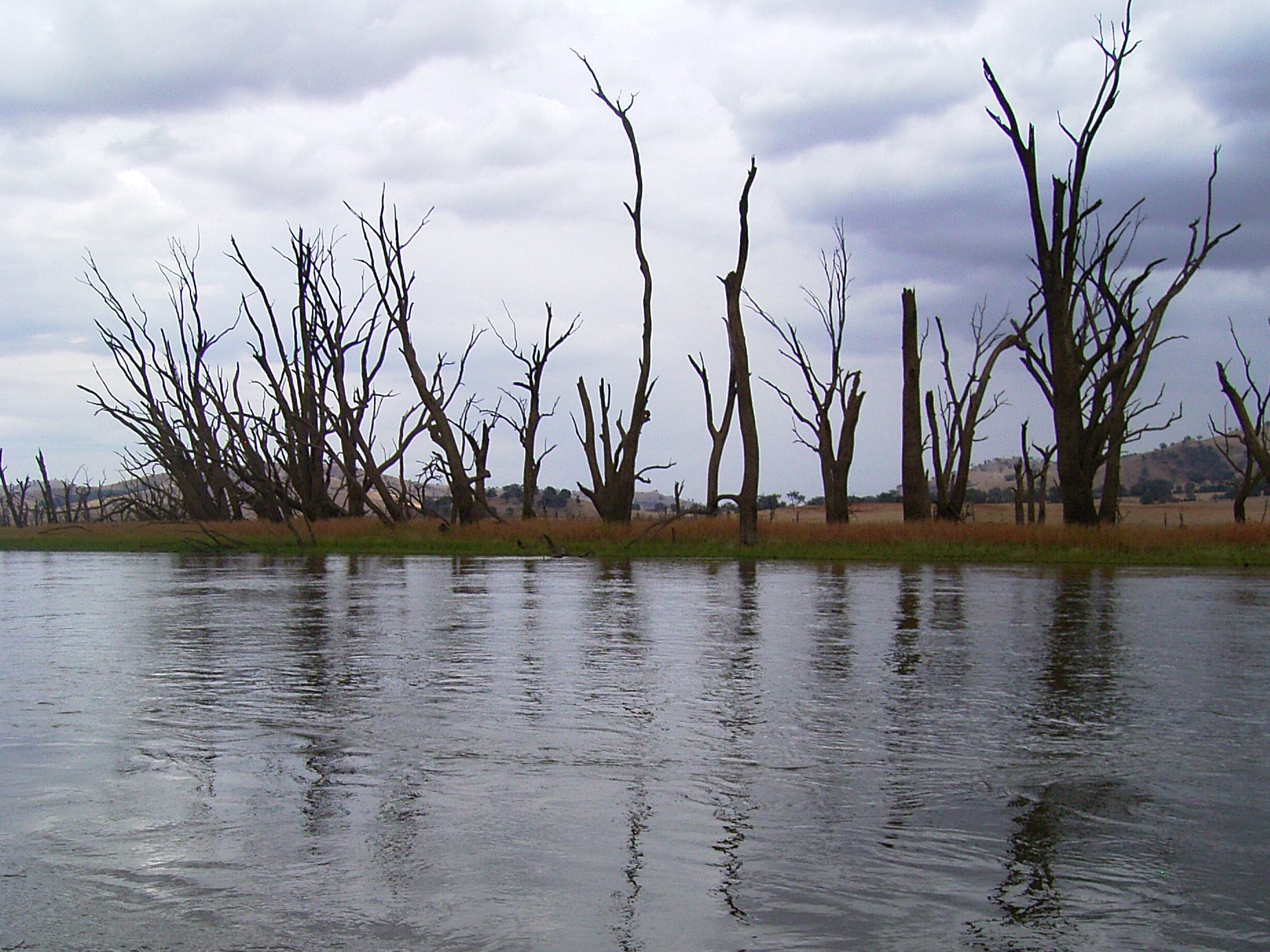
The sound of that river had a strange music to it. I remember sitting there and closing my eyes and I could imagine an ancient forest around me. But when I opened them there were drowned red gums, scotch thistles, reeds, weeds, and dried mud. From there I began riding into the hills.
The thing about the Australian Alps is that they do not rise in one overwhelming wall, as the Himalayas seem to in my mind. The alps here gather. One range becomes another. One hill gives way to a larger one. In the valleys you cannot really see the mountains at all. They surround you before they fully reveal themselves.After Tallangatta, the town that had been moved to higher ground when the dam expanded, I made my way down to the upper Murray and camped near a bridge beside two older men, one Croatian and one Serbian. I was told they had worked together in the same factory in Melbourne in the 1970s and had been coming back to this same camping spot year after year. They were kind, curious, and eager to know my story. I had hardly spoken to anyone properly in over a week, so their friendliness stayed with me. Looking back now, they seemed like two gatekeepers, showing me the way men could be friends
The next morning I rode up the Murray Valley to Khancoban, and from there I began the Alpine Way. That was when the road stopped being an idea and became a test. On the first day in the mountains I spent more time pushing my bike than riding it. The hills were so big and steep. I would push for an hour or two, then roll down, which was frightening on my heavy laden bike. On the plains, the mental task had been to keep going, ten kilometres at a time, until the day was done. In the mountains it became one white roadside post at a time. I would aim for the next one, then the next. Grit. One-pointedness. My body strained to do it. Somewhere in those hills I gave myself a hernia.
Somewhere above Khancoban I realised I had not thought of my former partner for several hours, or maybe it had been days. The next day in the middle of this wilderness I noticed that i had stopped rehearsing conversations that would never ever happen. There was only the next roadside post.
The final stretch up toward Dead Horse Gap passed through miles of forest that had been devastated by bushfire. Thousands of blackened trees seemed to stand watching me go by. Near the top, a ute stopped and offered me a lift. I was still perhaps an hour from the summit. I didn’t accept the lift. I wanted to do it for myself. That mattered to me then. I was achieving something big, in my own mind at least. Just me and the mountain.


When I reached the top, I didn’t feel big emotions, just a quiet sense of accomplishment. I remember calling my mother and telling her I hadn’t disappeared. Then I rolled down, stopping in Thredbo Ski Village and then on towards Jindabyne, letting the bike run after all that pushing and climbing. The downhill felt earned. I remember seeing young men taking chairlifts up the mountain with their bikes for downhill runs, and thinking how different my descent felt. I had climbed into mine.
My days became simple. I would wake, make tea on my little stove, eat oats with powdered milk, and begin riding. I would stop after a few hours for an orange and another cup of tea. Later I would boil water again for noodles or pasta with tuna. By evening I would pitch my tent, stretch my legs on a short walk, read a book, listen to music, and sleep hard. The rhythm itself became a kind of slow flow. I took few photos. I felt no great urge to write anything down. The road was enough.
There was one day, though, north of Batemans Bay, when my lack of presence nearly killed me. I must have drifted into a daydream. My front wheel slipped off the edge of the road into soft gravel, and I was thrown sideways. I rolled onto the road only seconds before a car came over the hill. Somehow I got up, dragged myself and the bike clear, and stood there with my heart pounding, swearing at my own absent-mindedness. That deadly absent-mindedness. Usually it only cuts a finger in the kitchen or stubs a toe on a chair leg. That day it nearly ended me.
And yet I got back on the bike and kept going.
I suppose that is the point. In life we can become almost fully consumed by the feeling that the future has closed around us. I’ve heard it called the ‘no-future feeling’. We can believe life has no meaning. Perhaps sometimes that is even true. But despite that feeling, life goes on. There is movement. There is change. If you allow it, life carries you into places larger than you could imagine from inside the grey room of your own thinking.
Looking back now, I don’t think the ride taught me that everything could be made okay.
If anything, it taught me the opposite.
There were no guarantees in my life.
The road climbed whether I wanted it to or not.
The weather changed.
My body hurt every day.
I crashed.
The future never arrived.
There was only the next bend, the next meal, the next roadside post, and the next town.
Back then, that was enough.
Other Articles in this Series:


This next Article below will lead you to the Camino de Santiago series:

Ahhh… the road to all that was not known. (But not the road to nowhere.) Healing takes time… I tell my girls that the brain needs two years to find its equilibrium again, after major events. We can feel lost, uncertain, aimless, emotional, and seek God. Questions have no answers. Guide post to guide post is all there is… one foot in front of the other. And one day it dawns on us that we feel the light again.
I really enjoyed reading this - how well you articulated your own physical and mental struggle, and how the landscape responds (or is vice versa?) I thought about so much while reading it. I particularly liked the line: "But I had also become too cerebral." This captures the city grind so well, especially nowadays with so much screen time from day to day. A good reminder to get out and reconnect with nature when we can. It brought to mind the poem from Rumi (https://www.tennesonwoolf.com/keep-walking-rumi/)
It's nice to be back in this part of Australia with you on your bike ride. The riding through the dry dam was an interesting flip side to all the old drowned snowy towns.